

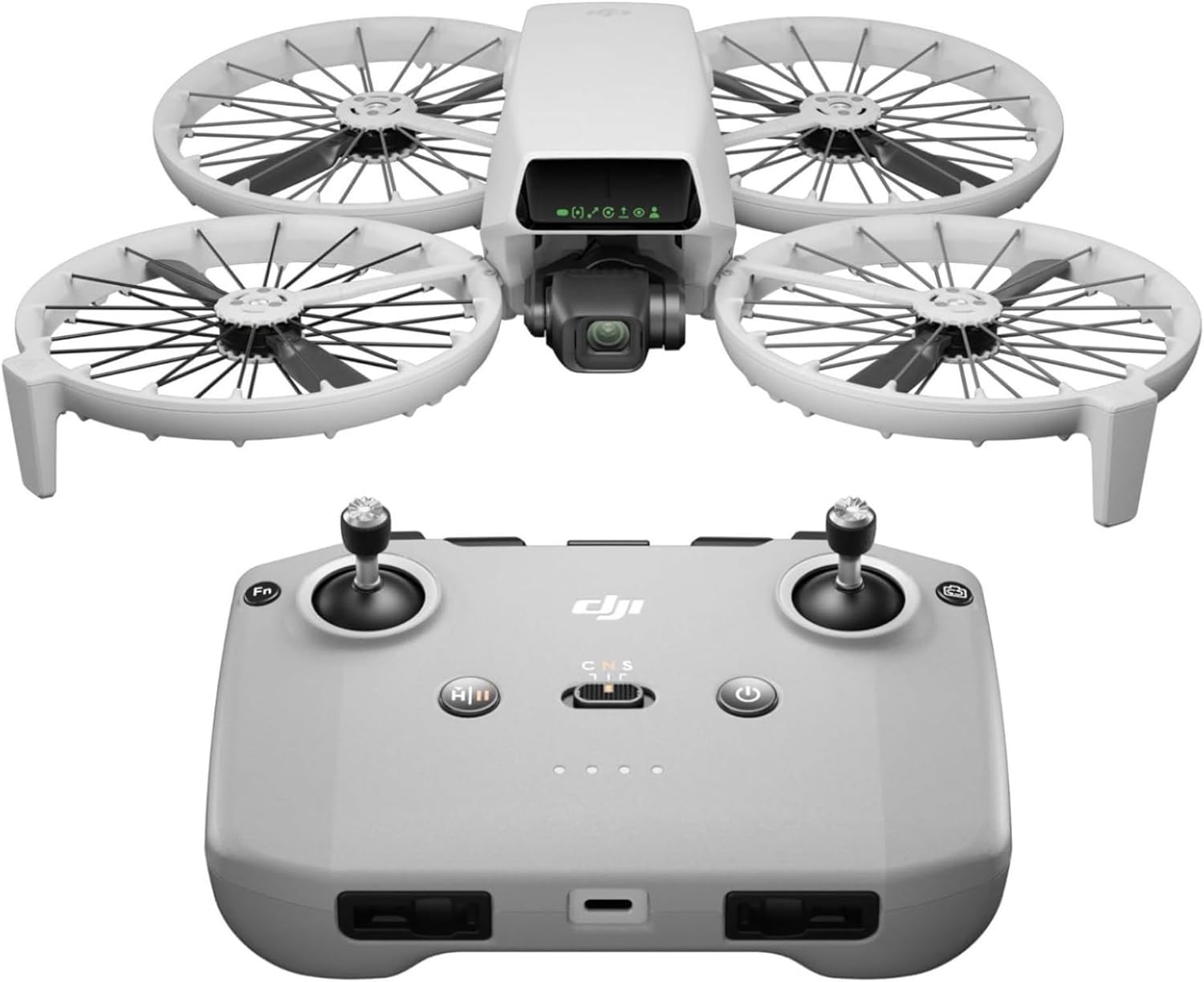
The DJI Flip (RC-N3) isn’t just another lightweight drone—it’s a bold step forward in smart, compact aerial photography. Designed for adults who want cinematic 4K quality without bulky gear or complicated setup, DJI Flip combines portability, intelligent flight features, and powerful imaging into one incredibly travel-friendly package.

Weighing under 249 grams, this drone sits in the sweet spot of convenience and performance. In the United States, that means no FAA registration or Remote ID required for recreational use. You can pack it in your backpack, take it on vacation, or pull it out during a weekend hike without worrying about regulatory headaches.
But what really makes DJI Flip stand out? Palm takeoff. Yes, you can launch it directly from your hand—no remote required. Add subject tracking, a 1/1.3-inch CMOS sensor, 4K/60fps HDR video, 13km transmission range, and 31-minute flight time, and you’ve got a compact drone that feels like a personal flying film crew.
It’s small. It’s smart. And it’s built for modern creators who want powerful results without complicated workflows.
Why DJI Flip Is Redefining Compact Drone Technology
Let’s be honest—small drones used to mean compromise. Weak cameras. Short flight times. Unstable footage. But DJI Flip flips that narrative entirely.
Instead of shrinking performance to match size, DJI engineered a compact drone that competes with larger models. The inclusion of a 1/1.3-inch CMOS sensor alone places it ahead of many sub-250g competitors. That larger sensor captures more light, delivering better clarity, richer color depth, and improved dynamic range.
Then there’s the intelligent ecosystem. Palm takeoff removes the barrier of needing a controller for quick shots. Subject tracking transforms it into an automated cinematographer. Foldable carbon fiber propeller guards improve safety while maintaining portability.
And let’s not forget the 44,000ft (13km) video transmission capability. That’s serious range for a drone this size.
DJI Flip isn’t just about flying—it’s about simplifying creativity. It reduces friction between idea and execution. Want to capture a sunset? Launch from your palm. Hiking up a trail? Let subject tracking follow you. Filming a celebration? Trust the 4K HDR camera to preserve every detail.
Compact doesn’t mean limited anymore.

Under 249g: Lightweight, Regulation-Friendly, and Travel-Ready
FAA & Remote ID Advantages
Weight is one of the most important factors in modern drone ownership. DJI Flip weighs under 249 grams, including its battery and propellers. That puts it below the 250g regulatory threshold in many countries.
In the U.S., recreational users typically do not need FAA registration or Remote ID for drones under 250g. That means less paperwork and more spontaneous flying.
Of course, laws vary by region, and users should always check local regulations before flight. But generally speaking, this weight category provides unmatched convenience.
Why Weight Matters for Drone Users
Beyond regulations, lightweight drones are simply easier to live with. They’re easier to carry. Easier to pack. Easier to deploy quickly.
Think of DJI Flip as your everyday camera—just one that happens to fly.
Palm Takeoff: Launch Without a Remote
Imagine pulling a drone out of your bag, placing it on your palm, and launching it into the sky with a simple command. That’s exactly what DJI Flip allows you to do.
Palm takeoff eliminates the need to set up a remote controller for quick captures. It’s perfect for:
- Travel selfies
- Quick social media clips
- Outdoor adventures
- Group shots

This feature makes drone flying feel natural and spontaneous rather than technical and intimidating.
It’s innovation designed for real life.
1/1.3-Inch CMOS Sensor: Bigger Sensor, Better Images
Sensor size plays a huge role in image quality. The DJI Flip features a 1/1.3-inch CMOS sensor, which captures significantly more light compared to smaller sensors found in many entry-level drones.
Low-Light Performance
A larger sensor means better low-light capability. Sunrise and sunset scenes retain warmth and clarity. Shadows hold more detail. Night cityscapes look cleaner and more dynamic.
Dynamic Range & HDR Capabilities
High Dynamic Range (HDR) allows the camera to balance bright highlights and dark shadows. The result? More natural-looking footage with enhanced depth and realism.
When you combine this sensor with 4K/60fps HDR video, the visual results are stunning.

Stunning 4K/60fps HDR Video Performance
4K resolution is now standard—but 4K at 60 frames per second with HDR takes it further.
Smoother motion. Richer color. More immersive detail.
Whether you’re filming fast-moving subjects or capturing scenic landscapes, DJI Flip preserves clarity and fluidity. HDR enhances contrast and color vibrancy, especially during challenging lighting conditions like golden hour.
This is footage that looks professional—even if you’re just starting out.
3-Axis Gimbal Stabilization: Cinematic Smoothness
A powerful camera means nothing without stabilization. DJI Flip includes a 3-axis mechanical gimbal that compensates for pitch, roll, and yaw movements.
The result? Smooth, cinematic footage even when the drone adjusts mid-flight.
Wind? Minor corrections? Direction changes? The gimbal absorbs it all.
Your footage stays steady and polished.
44,000ft (13km) Video Transmission: Stable and Reliable Signal
Digital Transmission Technology
DJI Flip offers up to 13km (44,000 feet) of maximum video transmission range under FCC conditions in open environments.
This doesn’t mean you should fly beyond line-of-sight regulations. Instead, it means stronger, more reliable signal stability at practical distances.

Real-World Range Expectations
In open areas with minimal interference, the connection remains smooth and responsive. Urban interference may reduce range, but DJI’s digital transmission system ensures stable real-time video feedback.
Confidence in signal equals confidence in flight.
Subject Tracking: Your Personal Aerial Director
Subject tracking turns DJI Flip into a flying cameraman.
Whether you’re jogging, biking, or hiking, the drone keeps you centered in the frame. It automatically adjusts position to maintain focus on your movement.
It’s perfect for:
- Solo travel creators
- Outdoor fitness enthusiasts
- Family events
- Action shots
No second person required. Just you and the sky.
Foldable Carbon Fiber Propeller Guards: Safety Meets Portability
Safety matters—especially for beginners.
DJI Flip features full-coverage propeller guards made from lightweight carbon fiber. These guards:
- Protect people nearby
- Reduce risk of damage
- Maintain lightweight structure
- Fold for portability
It’s protection without bulk.
31-Minute Flight Time: Create Without Interruption
With up to 31 minutes of maximum flight time per battery, DJI Flip offers enough endurance for most creative sessions.
Battery charger sold separately, and DJI recommends:
- DJI 30W USB-C Charger
- DJI 65W Portable Charger
For extended sessions, the Fly More Combo includes three batteries and a Parallel Charging Hub.
More batteries = more freedom.
Multiple Purchase Options Explained
DJI Flip comes in four purchasing options:
| Version | Includes |
|---|---|
| DJI Flip (RC-N3) | Drone, RC-N3 remote, 1 battery |
| DJI Flip (DJI RC 2) | Drone, RC 2 with high-bright screen, 1 battery |
| DJI Flip Fly More Combo (RC 2) | Drone, RC 2, 3 batteries, charging hub |
| DJI Flip Two-Battery Combo | Drone + 2 batteries (no remote) |
Choose based on your needs and budget.
RC-N3 vs RC 2 Controller: Which One Should You Choose?
RC-N3:
- Uses smartphone display
- Lightweight and affordable
- Ideal for budget-conscious buyers
RC 2:
- Built-in high-bright screen
- No need for smartphone connection
- Better outdoor visibility
If you want convenience and premium experience, go for RC 2. If you want value, RC-N3 is excellent.

Who Should Buy the DJI Flip?
DJI Flip is ideal for:
- Travel vloggers
- Beginners
- Outdoor adventurers
- Social media creators
- Casual hobbyists
It’s especially perfect for users who want portability, safety, and powerful imaging in one compact design.
Final Verdict: Is DJI Flip Worth It?
Absolutely. DJI Flip combines intelligent automation, high-end imaging, stable long-range transmission, and safety-focused design in a sub-249g drone.
It’s small enough to carry anywhere. Powerful enough to impress. Smart enough to simplify flying.
For creators who value portability and performance, DJI Flip is a standout choice.
Conclusion
The DJI Flip (RC-N3) delivers a premium drone experience in an ultra-lightweight, regulation-friendly package. With 4K/60fps HDR video, a 1/1.3-inch CMOS sensor, palm takeoff, subject tracking, and 13km transmission, it proves that compact drones can still deliver big performance.
Whether you’re capturing travel memories, cinematic landscapes, or social media content, DJI Flip makes the process simple, safe, and incredibly rewarding.
FAQs
1. Does DJI Flip require FAA registration?
For recreational use in the U.S., drones under 250g typically do not require registration. Always verify current regulations.
2. What is the maximum flight time?
Up to 31 minutes per battery under controlled conditions.
3. What makes the RC 2 different from RC-N3?
RC 2 includes a built-in high-bright screen, while RC-N3 requires a smartphone.
4. Can DJI Flip track subjects automatically?
Yes, it includes intelligent subject tracking.
5. Is the charger included?
No, the battery charger is sold separately. DJI recommends the 30W USB-C or 65W Portable Charger.